


Religion
The Religious Education Department offers a rich and engaging curriculum that explores Scripture, Ethics, Philosophy, and World Religions. Our goal is to deepen students’ understanding of faith, moral decision-making, and the role of religion in contemporary society, while fostering respect and empathy for diverse beliefs. We encourage critical thinking and analytical skills through discussion, debate, and evaluation tasks.
The department is committed to living out the five Lasallian principles, Faith in the Presence of God, Concern for the Poor and Social Justice, Respect for All Persons, Quality Education, and Inclusive Community, which underpin all aspects of our teaching and ethos. We also promote spiritual growth through liturgical celebrations, retreats, and charitable initiatives.
What makes our department stand out is our dedication to creating an inclusive environment where students can explore profound questions about life and meaning, supported by engaging teaching methods and real-world connections.


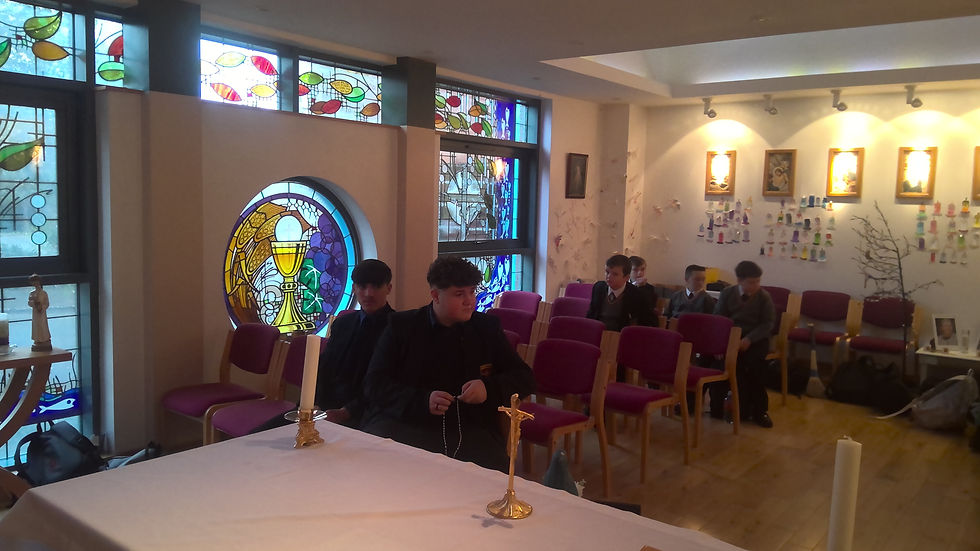
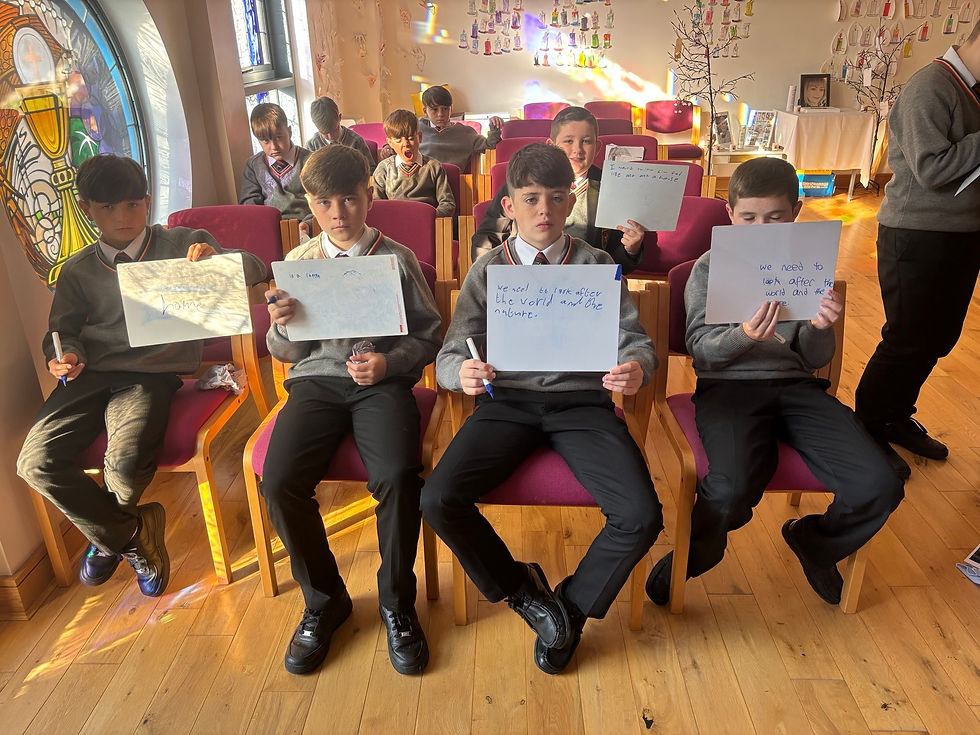


Key Stage 3
Our KS3 Religious Education curriculum follows the Department of Education Northern Ireland (DENI) syllabus and is primarily informed by the Fully Alive textbooks.
Across Years 8–10, students explore key themes such as the nature of faith, the life and teachings of Jesus, the Synoptic Gospels, sacraments, prayer, morality, and world religions. Each lesson is bespoke, designed in line with our principles of retrieval practice and metacognition to strengthen long-term understanding and prepare students effectively for GCSE Religious Studies.
Core skills developed include critical thinking, analysis, evaluation, and the ability to make connections between belief and contemporary issues. While rooted in the statutory framework, our approach emphasizes active learning strategies, discussion, and reflection to deepen engagement.
Enrichment opportunities include liturgical celebrations, charitable initiatives, and cross-curricular links with subjects such as History and English, ensuring a holistic and meaningful learning experience.

Key Stage 4
At KS4, the Religious Education Department offers two distinct pathways to meet the needs of all learners: the GCSE route and the vocational OCN Level 2 qualification.
GCSE
For GCSE Religious Studies, we follow the CCEA specification, covering Ethics and Philosophy of Religion over two years. Students explore topics such as the existence of God, the problem of evil, relationships, and contemporary moral issues, developing skills in analysis, evaluation, and structured written responses. Assessment is through formal examinations at the end of Year 11 and Year 12.
OCN Level 2
The alternative pathway is the OCN Level 2 Certificate in Religious Studies, which is entirely coursework-based and completed over two years. This vocational route covers a broad range of relevant and engaging topics, including World Religions, Addiction, Prejudice and Reconciliation, and Life and Death Issues. Students produce written assignments and projects, allowing for continuous assessment and practical application of learning.
Both pathways aim to prepare students for further study at A-Level and beyond, as well as careers in education, social care, community work, and other fields where ethical understanding and interpersonal skills are valued. Enrichment opportunities include charitable initiatives, guest speakers, and cross-curricular projects, ensuring students develop both academically and personally.

Key Stage 5
At KS5, students study A Level Religious Studies following the CCEA specification. This advanced course develops critical thinking, analytical writing, and ethical reasoning skills through two major themes:
Theme 1: Themes in the Synoptic Gospels: Students explore the Synoptic Problem, authorship and dating of the Gospels, key theological themes, and the historical and literary context of the texts.
Theme 7: Global Ethics: Learners examine ethical theories and their application to contemporary issues such as justice, equality, human rights, environmental ethics, and global responsibility.
Assessment:
AS Level (Year 13): Two written examinations
A2 Level (Year 14): Two written examinations
Assessment focuses on knowledge, analysis, and evaluation through structured essay responses.
Enrichment and Support:
Guest speakers from academic and faith communities.
Study skills workshops and essay-writing clinics
Opportunities for charitable initiatives and cross-curricular projects
Progression:
This program prepares students for university degrees in Theology, Philosophy, Law, Social Sciences, and related fields, as well as apprenticeships and careers in education, social care, community work, and public service.
Faith Development
The Religious Education Department offers a rich program of extracurricular activities that support students’ spiritual growth, wellbeing, and aspirations. Pupils regularly attend retreats designed to encourage reflection and community building, through our links with the Lasallian Pastoral Centre. Pupils' benefit from inspiring guest speakers who address topics such as faith, ethics, and Social Justice.
We are proud to celebrate our third consecutive year of winning the Spirit of Catholic Education Award, recognizing our commitment to nurturing the faith development of our students.
Additional opportunities include charitable initiatives working with St. Vincent De Paul and Foodstock, cross-curricular projects, and leadership roles in service activities such as CEPHAS.
